
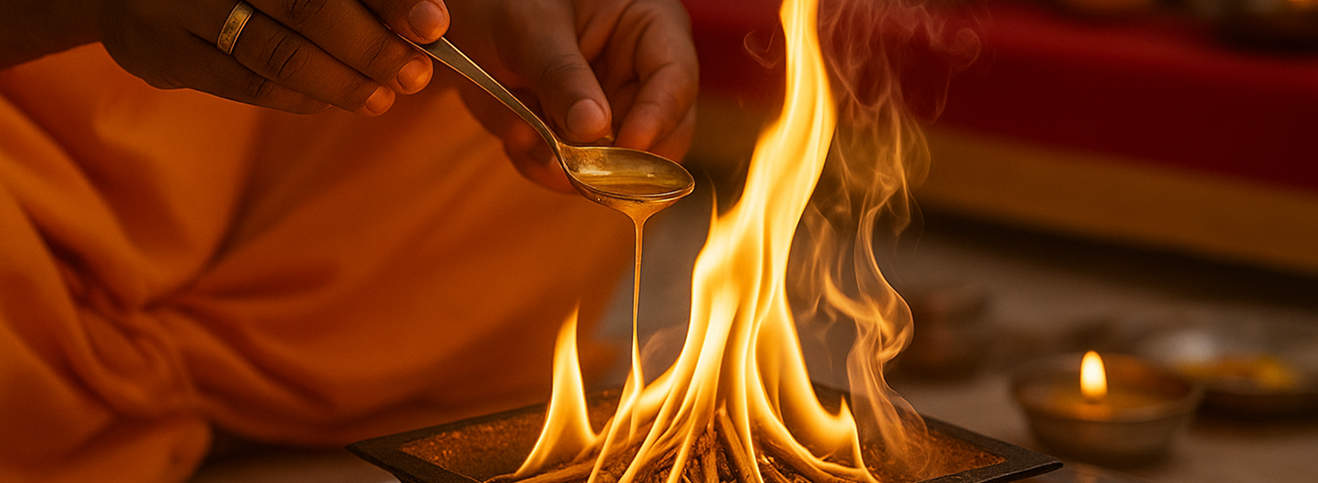
Yagyas & Samskaras
YAGYAS & SAMSKARAS
Samskara Ceremonies
The temple Brahmins are well versed and trained in performing specialised yagya ceremonies for new homes, birthday celebrations and other occasions as well as performing samskara ceremonies on the birth of a new child and other events throughout its life.
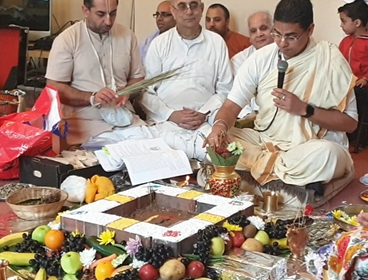
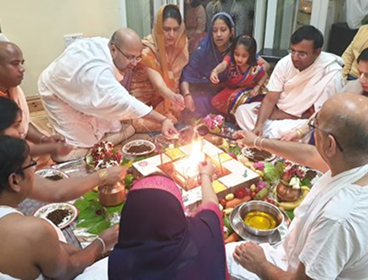
Many devotees are beginning to realise the necessity of, and practical functions of the system of Samskaras as laid down in the culture of Krishna consciousness. As spirit souls with material bodies, we can redirect our attention toward Krishna at all stages of life.
“Samskara's are the gentle reminders placed throughout our life's journey, guiding the soul back toward its eternal relationship with Krishna.”
Garbhadhanam (Impregnation)
Rite for invoking a pious child into the womb of the mother.
Sosyanti Homa (Rite for safe delivery of the child)
Performed a few days before the birth of the child.
Niskramanam (Taking the child out for the first time)
Performed 10th, 12th, 15th, or 30th day following birth (depending upon varna).
Nama Karana (Name giving ceremony)
Performed on the first, tenth, twelfth, hundredth day or one full year from birth. A good name acts as a shield against evil and supports the child through life.
Paustika Karma (Ceremony for the continued health of the child)
Performed once every month for the child's first year.
Anna Prasana (First grains ceremony)
6th or 8th month for boys and 5th or 7th month for girls.
Cuda Karanam (Hair-cutting ceremony)
Traditionally performed within the first years of life. It is also customary among pilgrims to offer one's hair to the Deity as a sign of detachment.
Putra Murdhabhighranam (Smelling the son's head)
Performed after Anna Prasana.
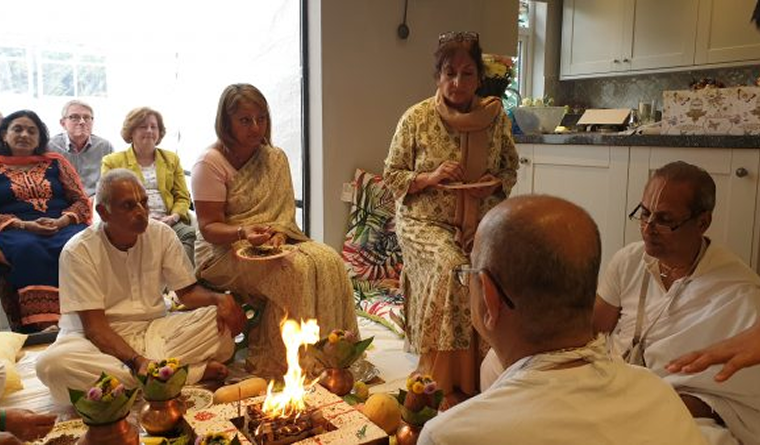
During the first grains ceremony (Anna-prasana), the priest asks Lord Vaisvanara (Vishnu) to enter the child's body to accept the solid foods the child will eat throughout life. This ceremony marks the beginning of a gentle detachment from the mother.
Grha-pravesa is performed so the new place (house, shop, etc.) is purified and Vishnu can reside there to protect and bless it, also helping to dispel negative subtle influences associated with the place.
The above ceremonies require the performance of yajna with the exception of Niskramanam, Putra Murdhabhighranam, and Garbhadhanam. A full prasadam feast can be arranged and cooked by devotees at the temple (charged at extra cost).
Samskara Services
which require yajna
plus donation for the Brahmin/Priest
Samskara Services
which do not require yajna
donation for the ceremony